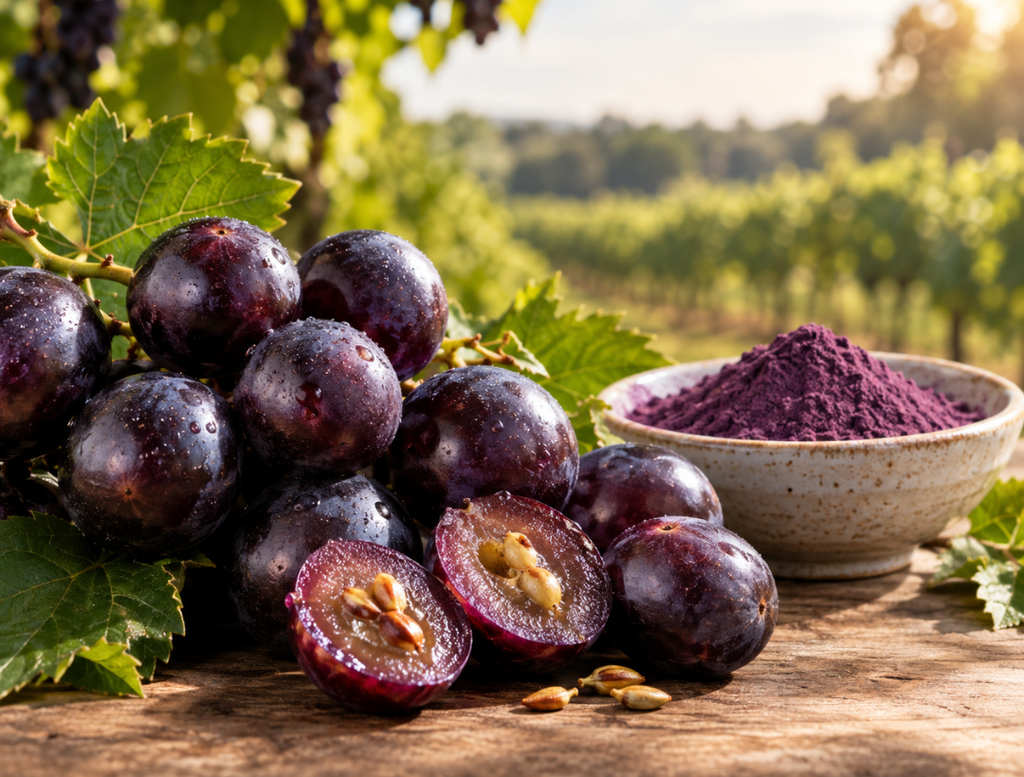
Muscadine Grape vs. Regular Resveratrol: Why Georgia's Native Grape Is the Most Polyphenol-Rich Ingredient You've Never Heard Of
If you have ever searched for a resveratrol supplement, you have probably noticed that most products focus on one familiar compound: resveratrol.
But resveratrol is only one part of a much larger world of plant polyphenols.
That is where the muscadine grape becomes interesting.
Native to the southeastern United States, the muscadine grape has a naturally distinctive composition that includes a broad range of polyphenolic compounds. Unlike products designed around a single isolated compound, muscadine-derived ingredients can contain polyphenols originating from different parts of the grape, particularly the skin and seeds.
For anyone exploring natural polyphenols, grape extracts, or polyphenol powder, muscadine offers a different way to think about grape-based ingredients.
And it starts with understanding the difference between isolated resveratrol and the naturally complex chemistry of the whole muscadine grape.
What Is a Muscadine Grape?
Muscadine is a grape species known scientifically as Vitis rotundifolia. It is native to the southeastern United States and is particularly associated with the warm, humid climate of states across the region, including Georgia.
Unlike the familiar table grapes found in most grocery stores, muscadines have a noticeably thicker skin and contain seeds. Those characteristics are important when discussing their natural polyphenol profile.
Research examining muscadine grapes has identified numerous polyphenolic compounds in their skins and seeds. These include different classes of compounds rather than just one isolated molecule.
That diversity is one reason muscadine has attracted attention as an ingredient for grape polyphenol products.
Resveratrol Is Just One Polyphenol
Resveratrol is a naturally occurring polyphenol found in certain plants, including grapes.
It has also become one of the most recognizable names in the supplement ingredient market. A search for resveratrol supplement produces a large number of products built around purified or concentrated resveratrol.
But there is an important distinction:
Resveratrol is a compound. Muscadine is a whole grape source containing a broader collection of naturally occurring compounds.
That difference matters when comparing the two as ingredients.
Think of it this way: isolated resveratrol focuses attention on one specific component, while a muscadine grape-derived ingredient can represent a wider polyphenol profile.
Muscadine grape extract has been documented as containing compounds including resveratrol, flavonoids, tannins, quercetin, ellagic acid, myricetin and kaempferol-related compounds.
So, the interesting question is not simply whether muscadine contains resveratrol.
It does.
The more interesting question is what else comes with it.
Muscadine Grape vs. Regular Resveratrol
The easiest way to understand the difference is to look at the ingredient itself.
Resveratrol
- A specific naturally occurring polyphenolic compound
- Often sold as an isolated ingredient
- Available in capsules, powders and other supplement formats
- Commonly associated with grape-derived products
Muscadine grape
- A whole grape species native to the southeastern United States
- Naturally contains multiple polyphenolic compounds
- Has distinctive skin and seeds
- Can be processed into extracts and muscadine grape powder
- Provides a broader ingredient profile than isolated resveratrol alone
This does not mean one ingredient automatically replaces the other.
They are simply different approaches to plant-based polyphenols.
A person searching specifically for purified resveratrol may want an ingredient centered around resveratrol itself. Someone looking for a more diverse natural polyphenol ingredient may be more interested in muscadine.
Why the Skin and Seeds Matter
One of the most interesting characteristics of muscadine grapes is their thick skin and seeds.
When grapes are processed for juice or other food applications, the skin and seeds can become part of the remaining grape material. These components contain many of the compounds that make grape varieties chemically interesting.
Scientific research has specifically examined the polyphenol composition of muscadine grape skins and seeds and identified multiple compounds across different muscadine varieties.
This is one reason muscadine grape extract and muscadine grape extract powder can be interesting ingredient categories.
Instead of focusing on a single molecule, the ingredient can be discussed in terms of its broader grape-derived polyphenol composition.
What Makes Muscadine Different From Ordinary Grapes?
Muscadine should not simply be treated as another name for the common grapes used in everyday foods.
Its botanical identity, growing environment, thick skin and seeded fruit structure give it a distinctive ingredient profile.
The southeastern United States is particularly important to the muscadine story. The grape is deeply connected with the region's agricultural history, making it an especially interesting example of a native American fruit being explored in modern ingredient applications.
For a brand focused on naturally sourced ingredients, that origin creates a compelling story without relying on exaggerated claims.
It is a story about place, plant variety and polyphenol diversity.
Where Does Polyphenol Powder Fit In?
The term polyphenol powder is becoming increasingly useful for consumers and product developers interested in concentrated plant-derived ingredients.
A powder format can provide a convenient way to incorporate a concentrated ingredient into different formulations.
But not all polyphenol powders are identical.
The source matters.
A powder derived from a single purified compound is fundamentally different from a powder derived from a fruit or plant material containing multiple naturally occurring compounds.
That is why the source should always be part of the conversation.
With a muscadine-based ingredient, the source is clear: a distinctive southeastern American grape with a naturally diverse polyphenol profile.
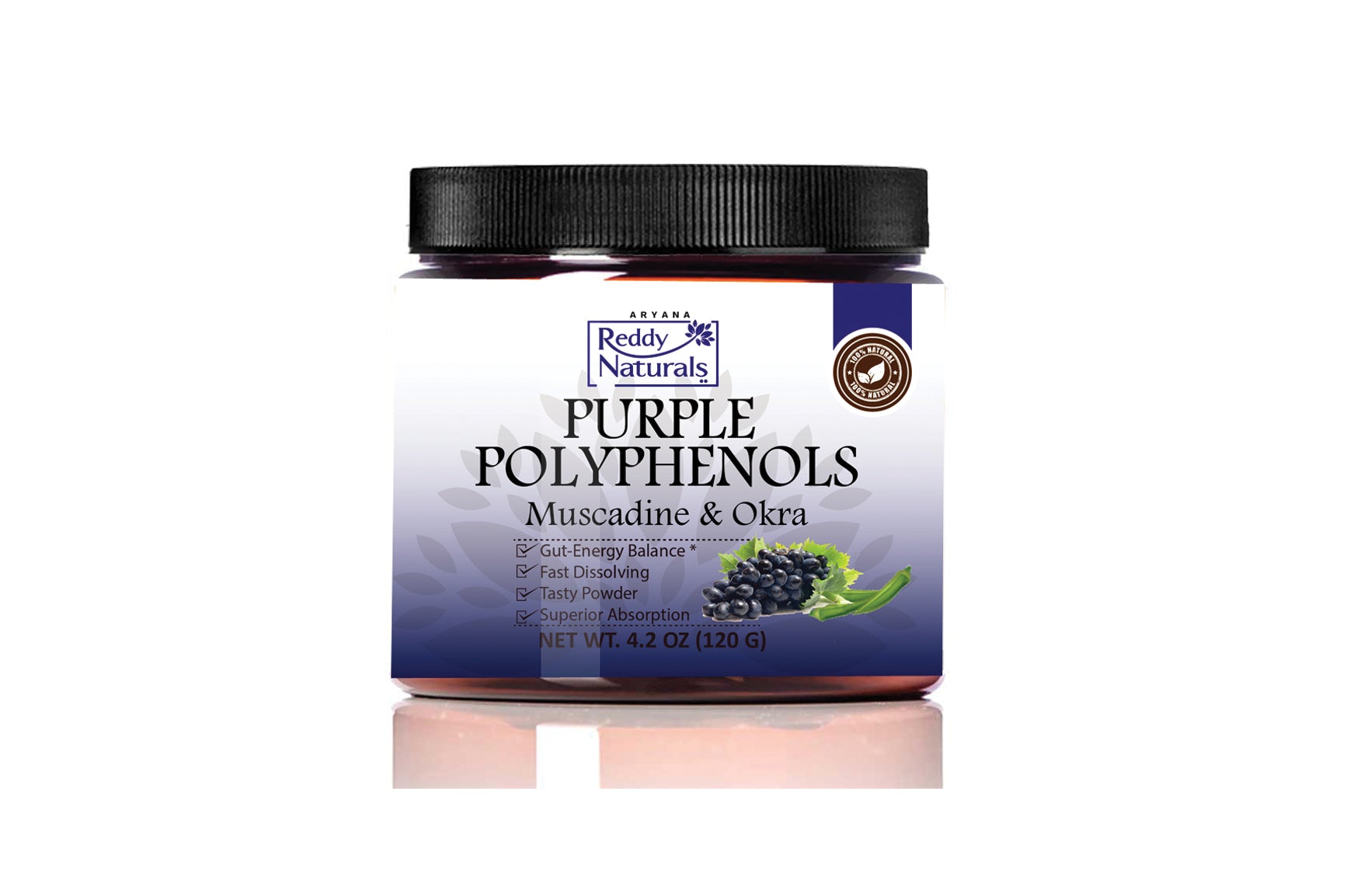
Why Purple Polyphenols Is Different
This is where Purple Polyphenols takes a different approach.
Rather than making the conversation about another generic grape ingredient, the focus is on the unique characteristics of muscadine-derived polyphenols.
The story begins with the grape itself.
Muscadine.
A native southeastern American grape with naturally distinctive skin, seeds and polyphenolic composition.
For consumers exploring muscadine grape powder, grape polyphenols, polyphenol powder, or resveratrol alternatives, that distinction provides a new way to understand what they are actually buying.
It also makes ingredient transparency more meaningful.
Instead of simply seeing “grape extract” on a label, consumers can learn about the specific grape source and the naturally occurring compounds associated with it.
A Different Way to Look at Resveratrol
Resveratrol remains an important and widely recognized polyphenol.
But it does not have to be the entire conversation.
Muscadine shows that the world of grape-derived polyphenols is much broader than one compound.
For people researching a resveratrol supplement, understanding this distinction can make ingredient labels easier to interpret.
Is the product centered around isolated resveratrol?
Is it based on a grape extract?
Does it contain a broader collection of grape-derived polyphenols?
Those are different ingredient stories.
And that is precisely what makes muscadine worth knowing.
The Bottom Line
Muscadine may not have the same mainstream recognition as resveratrol, but that is part of what makes it interesting.
It is a distinctive American grape with a naturally diverse polyphenol profile, particularly in its skin and seeds. Research has identified multiple classes of polyphenolic compounds in muscadine varieties, making it a compelling source for modern grape-derived ingredients.
So, when comparing muscadine grape vs. regular resveratrol, the real difference is not about choosing a winner.
It is about understanding the ingredient.
Resveratrol represents one specific polyphenol.
Muscadine represents a grape with a broader natural composition.
And for anyone searching for natural polyphenols, muscadine grape extract, grape polyphenols, or polyphenol powder, that distinction is worth knowing.
Muscadine may just be the grape you have never heard of—but one worth putting on your ingredient radar.
RECENT POSTS

03.January.2026
Reddy Naturals Turmeric Curcumin: A Delicious Way to Add Golden Wellness to Your Day
0 Comments